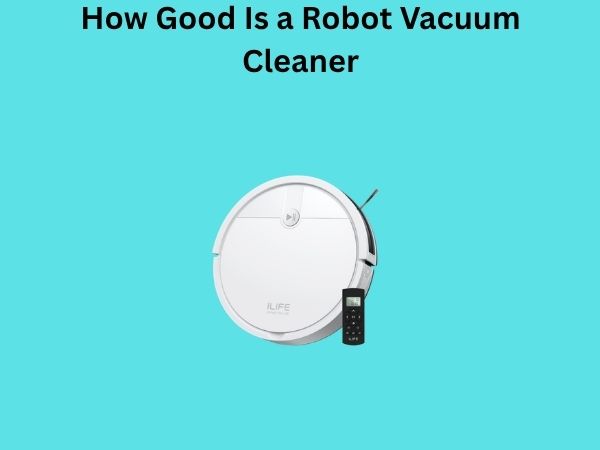
How Good Is a Robot Vacuum Cleaner? A Complete Daily Cleaning Power Guide
Have you ever wished you could just press a button and have your floors cleaned while you go about your day? Well, robot vacuum cleaners promise to do exactly that, but the question that keeps homeowners up at night is simple: do they actually deliver? I’ve spent considerable time researching, testing, and analyzing these fascinating devices, and I’m here to give you the honest truth about their cleaning capabilities.
Understanding the Robot Vacuum Revolution
When robot vacuums first hit the market, they seemed like pure science fiction. The idea that a small, disc-shaped machine could autonomously navigate your home and pick up dirt seemed almost magical. Fast forward to today, and these devices have evolved dramatically. But here’s the thing—not all robot vacuums are created equal, and understanding their real-world performance is crucial before you invest your hard-earned money.
Think of a robot vacuum as the reliable friend who shows up to help, but maybe not the one you’d call for a deep clean before hosting your in-laws. It’s dependable for everyday maintenance, but it has limitations that you need to know about.
The Core Question: Are They Actually Effective?
Let’s address the elephant in the room right away. Yes, robot vacuums are genuinely effective at their primary job—removing dust, pet hair, and light debris from your floors on a daily basis. However, “effective” doesn’t mean “perfect.” They’re not going to replace your traditional vacuum completely, at least not yet.
Cleaning Performance Breakdown
Suction Power and What It Really Means
When manufacturers talk about suction power, they usually cite measurements in Pascals or air watts. But what does this actually translate to in your living room? Here’s my honest assessment: modern robot vacuums typically deliver between 1200 to 4000 Pascals of suction power. Compare that to a standard upright vacuum, which can reach 20,000 Pascals, and you start to see the picture.
However—and this is important—robot vacuums don’t need to match the raw power of traditional vacuums because they work differently. They’re in constant contact with your floors over extended periods, which allows them to incrementally remove debris rather than requiring one powerful pass.
What They Clean Best
Robot vacuums excel at specific cleaning scenarios:
- Hard floors like tile, laminate, and vinyl—they genuinely shine here
- Short pile carpets and area rugs—they handle these reasonably well
- Fine dust and pet hair on low-traffic areas—their daily passes accumulate results
- Light crumbs and everyday debris—this is their sweet spot
Where They Struggle
Now, let’s talk about their limitations because every honest review needs to address these:
- Deep carpet cleaning—they simply can’t achieve the results of a traditional carpet cleaner
- High-pile carpets and thick rugs—they often get stuck or turn back around
- Staircases—they can’t climb stairs, which is a fundamental limitation
- Tight corners and edges—their circular design leaves about 2-3 inches unclean around room perimeters
- Wet spills or sticky messes—they’re strictly for dry cleaning
Navigation and Intelligence Systems
How Modern Robot Vacuums Find Their Way
The technology behind robot vacuum navigation has evolved tremendously. Earlier models used random bump-and-navigate patterns, essentially stumbling around your home like a confused robot. Today’s advanced models use various technologies to map your space intelligently.
LIDAR technology (used by premium models) creates detailed maps of your home, allowing the vacuum to plan efficient routes. Some use camera-based systems, while others rely on gyroscopes and accelerometers. The better the navigation system, the more efficiently they clean and the less time they waste.
Smart Home Integration and App Control
Most modern robot vacuums connect to your smartphone via apps, allowing you to schedule cleanings, set boundary lines, and even start them remotely. Some integrate with voice assistants like Alexa or Google Home. While these features add convenience, they don’t directly improve cleaning performance—they just make the device easier to use.
Real-World Performance Factors
How Your Home Layout Affects Results
Here’s something manufacturers don’t emphasize enough: your home’s layout dramatically impacts how well a robot vacuum performs. If you have an open-concept living space, a robot vacuum will absolutely love you. But if your home is a maze of small rooms, doorways, and tight spaces, you might find yourself constantly retrieving the device from corners where it’s gotten stuck.
My suggestion? Walk through your home and identify potential problem areas before purchasing. Look for electrical cords, pet bowls, children’s toys, and furniture legs that might interfere with smooth operation.
Maintenance Requirements
Here’s the truth nobody wants to hear: robot vacuums aren’t completely hands-free. Sure, they clean themselves, but they require regular maintenance to keep performing well. You’ll need to:
- Empty the dustbin after each cleaning cycle (usually holds less than a traditional vacuum)
- Clean brush rollers weekly to prevent hair tangling
- Wipe sensors monthly to maintain navigation accuracy
- Replace filters every few months depending on your home’s dust levels
If you’re not willing to do this minimal maintenance, a robot vacuum won’t serve you well. Think of it as the price of convenience.
Pet Hair and Allergen Removal
Are They Good for Pet Owners?
Pet owners often ask me whether robot vacuums can handle the constant stream of hair from cats and dogs. The answer is: yes, but with caveats. Robot vacuums are surprisingly effective at managing pet hair when used consistently. However, you’ll need models specifically designed for this task—ones with tangle-free brush rollers and stronger suction power.
If you have multiple pets that shed aggressively, you might need to run your robot vacuum daily or even twice daily to prevent hair accumulation. It’s not a set-it-and-forget-it solution, but it’s definitely better than nothing.
Allergen Filtration
Many robot vacuums include HEPA filters, which can trap allergens. However, their effectiveness depends on the quality of the filter and how often you clean or replace it. If allergies are a primary concern, make sure you invest in a model with genuine HEPA filtration and commit to regular maintenance.
Cost-Benefit Analysis
Price Ranges and What You Get
Robot vacuums range from budget options at $200 to premium models exceeding $1,000. Here’s what typically changes as you spend more:
- Budget models ($200-$400): Basic navigation, moderate suction, limited smart features
- Mid-range models ($400-$700): Better navigation with mapping, stronger suction, smartphone apps
- Premium models ($700+): Advanced LIDAR mapping, zone control, auto-empty stations, superior suction
The question isn’t which is the most expensive, but which offers the best value for your specific situation. A mid-range model might be perfect for a small apartment, while a larger home might benefit from a premium option.
Is It Worth the Investment?
Let’s talk about return on investment. If you’re replacing a traditional vacuum entirely, a robot vacuum might not be the answer. But if you’re looking to reduce how often you manually vacuum from three times a week to once a week, then yes, it’s absolutely worth it. The time savings accumulate over months and years.
Consider your lifestyle: Are you constantly busy? Do you have pets? Is maintaining a pristine home important to you? If you answered yes to any of these, a robot vacuum is likely a worthwhile investment.
Comparing Robot Vacuums to Traditional Models
When Robot Vacuums Win
Robot vacuums outperform traditional vacuums in specific scenarios. If you want consistent, daily maintenance without effort, robots are superior. They’re also quieter than most upright vacuums and better for people with mobility issues or chronic pain. They excel at preventing dirt accumulation, meaning your home stays consistently cleaner even if individual cleaning sessions are less intense.
When Traditional Vacuums Are Better
Traditional vacuums still reign supreme for deep cleaning, staircases, and handling thick carpets. If you have a multi-level home, a traditional vacuum is essential for upper floors. For post-party cleanup or dealing with significant spills, you’ll always need a traditional vacuum on standby.
Overcoming Common Challenges
Dealing with Obstacles and Problem Areas
Most robot vacuum owners discover certain challenge areas after purchase. Here’s how to address them. Install physical barriers using magnetic tape or boundary markers to keep your robot vacuum away from stairs. Use cable management solutions to keep electrical cords off the floor. Pick up toys and items before each cleaning cycle—this might seem tedious, but it’s essential for success.
Noise Levels
Robot vacuums are generally quieter than traditional vacuums, typically operating between 50-70 decibels. This makes them suitable for use while you work or sleep. However, if you’re sensitive to noise, test the specific model before buying.
Future Improvements and What’s Coming
The robot vacuum industry continues to innovate rapidly. We’re seeing improvements in suction power, longer battery life, smarter navigation, and the introduction of hybrid models that both vacuum and mop. Some manufacturers are developing robot vacuums that can climb stairs—yes, you read that correctly. Within the next few years, these devices will likely become even more capable and useful.
The Honest Bottom Line
So, how good is a robot vacuum cleaner? They’re genuinely good—just not perfect. They’re exceptional for daily maintenance cleaning, particularly on hard floors. They’re convenient, increasingly intelligent, and they truly do reduce the amount of time you spend vacuuming manually. However, they’re not a complete replacement for traditional vacuums, they require some maintenance themselves, and they work best in homes with open layouts and minimal obstacles.
If your expectations are realistic and your home is suitable, a robot vacuum will significantly improve your quality of life. If you’re hoping for a magical device that completely eliminates the need for traditional cleaning, you’ll be disappointed.
Conclusion
After thoroughly examining the capabilities and limitations of modern robot vacuum cleaners, I can confidently say they represent a genuine advancement in home cleaning technology. They’re not perfect, and they’re certainly not a universal solution for every home and every cleaning situation. However, for the right person in the right circumstances, a robot vacuum is a transformative purchase that delivers real value.
The key to satisfaction lies in understanding what these devices do well—consistent daily cleaning, management of pet hair, maintaining hard floors—and accepting their limitations. They struggle with deep carpet cleaning, staircases, and tight corners. They require some maintenance and a pre-cleaned floor to work optimally. If you can accept these realities and your home layout is conducive to their operation, you’re looking at a device that will genuinely reduce your cleaning burden. Modern robot vacuums have evolved from novelty items to practical household appliances that deserve serious consideration. Just make sure your expectations align with reality, and you’ll be thrilled with your investment.
Frequently Asked Questions
Can a robot vacuum completely replace a traditional vacuum?
For most homes, the answer is no. While robot vacuums excel at daily maintenance cleaning, they cannot handle staircases, deep carpet cleaning, or the thorough cleaning that traditional vacuums provide. However, if you have primarily hard floors and a single-level home, they might handle most of your cleaning needs. I recommend keeping a traditional vacuum for periodic deep cleaning and stair maintenance, while using your robot vacuum for daily upkeep.
How often should I run my robot vacuum?
For optimal results, running your robot vacuum daily is ideal, especially if you have pets or a busy household. Some people run theirs every other day and still maintain clean floors. The frequency depends on your lifestyle, foot traffic, and shedding pets. Most modern robot vacuums have scheduling features, so you can set them to run during times when you’re out of the house, making the process completely automatic.
Are robot vacuums good for pet hair?
Yes, robot vacuums handle pet hair quite well, but you need to choose the right model. Look for units with tangle-free brush rollers specifically designed for pet hair, along with strong suction power. Keep in mind that you’ll need to empty the dustbin more frequently, potentially daily if you have multiple shedding pets. Regular maintenance of the brush rollers is also essential to prevent hair tangles that can reduce cleaning efficiency.
What’s the best robot vacuum for large homes?
For larger homes, you’ll want a robot vacuum with strong suction power, long battery life, and intelligent mapping capabilities. Premium models with LIDAR navigation can efficiently clean 3,000+ square feet on a single charge. Look for models that offer zone control so you can designate specific areas for cleaning. Also consider whether you want an auto-empty station, which is particularly useful for larger homes since the unit can empty itself and return to cleaning without interruption.
How much maintenance do robot vacuums really require?
Robot vacuums require moderate maintenance to perform optimally. After each cleaning cycle, you’ll need to empty the dustbin, which typically takes under a minute. Weekly, you should clean the brush rollers to prevent hair tangles. Monthly, wipe the sensors to maintain navigation accuracy. Every few months, replace the filter. Additionally, before each cleaning session, do a quick walkthrough to remove potential obstacles like cords or toys. While this might sound like a lot, it’s actually minimal compared to the time saved by not manually vacuuming your entire home.