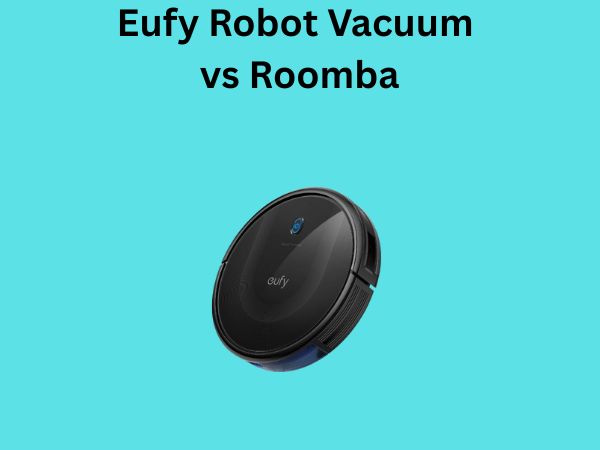
Eufy Robot Vacuum vs Roomba: Which Robot Vacuum Should You Choose?
Let me be honest with you—choosing between a robot vacuum can feel like picking between two equally attractive options at a restaurant. You know both will satisfy your hunger, but which one truly delivers the better experience? That’s exactly where you might find yourself when comparing Eufy robot vacuums with Roomba models.
The robot vacuum market has exploded over the past few years, and these two brands have emerged as the frontrunners in most people’s minds. But here’s the thing: just because they’re both popular doesn’t mean they’re equally suited for your home. In this comprehensive guide, I’m going to break down everything you need to know about these two vacuum giants so you can make an informed decision without any regrets.
Article Outline: Your Roadmap to Making the Right Choice
- Understanding the Basics: What Makes a Robot Vacuum Worth Your Money
- Brand Overview: Getting to Know Eufy and Roomba
- Suction Power and Cleaning Performance Comparison
- Smart Features and App Integration
- Battery Life and Runtime Expectations
- Noise Levels: How Loud Are These Machines?
- Price Point Analysis: What You’re Actually Paying For
- Navigation and Mapping Technology
- Maintenance and Filter Replacement Costs
- Pet Hair Handling: A Critical Consideration
- Customer Support and Warranty Coverage
- Real-World Performance: What Owners Actually Experience
- Design and Aesthetics: Does It Matter?
- Making Your Final Decision
Understanding the Basics: What Makes a Robot Vacuum Worth Your Money
Before we dive into the specifics of Eufy versus Roomba, let’s talk about what actually matters when you’re investing in a robot vacuum. Think of it like buying a car—you wouldn’t just look at the color and call it a day, right? You’d consider fuel efficiency, reliability, maintenance costs, and how well it performs on different road conditions.
A quality robot vacuum should be able to navigate your home without getting stuck every five minutes, clean effectively across different floor types, and ideally run long enough that you’re not babysitting the charging dock all day. It should also be smart enough to learn your home’s layout and remember where it’s been. These aren’t unreasonable expectations; they’re basic requirements for a device you’re trusting with your floors.
The Core Features You Should Care About
When evaluating any robot vacuum, pay attention to suction power measured in pascals (Pa), battery capacity in milliamp hours (mAh), and the type of navigation system it uses. Runtime is equally important—a vacuum that dies halfway through your living room isn’t helping anyone. You’ll also want to consider how often you’ll need to empty the dustbin and whether the device can handle stairs, transitions between tiles and carpet, and your pet’s shedding patterns.
Brand Overview: Getting to Know Eufy and Roomba
Let’s start by understanding who these brands are and where they come from. This context will help you understand their philosophies and why they design their products the way they do.
Eufy: The Underdog with Innovation
Eufy is a subsidiary of Anker Innovations, a Chinese company that’s known for producing affordable yet reliable tech products. The brand burst onto the robot vacuum scene with a philosophy of delivering premium features at mid-range prices. They’re like the quiet achiever in class who doesn’t get as much attention but consistently produces excellent work.
Eufy products are available primarily through Amazon and their official website, which actually helps keep costs down since they’re not paying for brick-and-mortar retail space. The company has been investing heavily in AI and machine learning to improve their cleaning algorithms, and they’ve built a reputation for being responsive to customer feedback.
Roomba: The Market Leader with Decades of Experience
Roomba is made by iRobot, a company that literally pioneered the robot vacuum category back in 2002. They’ve had over two decades to refine their technology and build brand recognition. When most people think “robot vacuum,” their mind immediately goes to Roomba. It’s kind of like how everyone says “Kleenex” when they mean tissue paper.
iRobot has the advantage of massive distribution networks, established retail partnerships, and significant research and development budgets. They’ve been able to invest heavily in technology patents and have created a robust ecosystem of smart home integration. However, this market dominance often comes with premium pricing.
Suction Power and Cleaning Performance Comparison
Here’s where things get interesting. Suction power is like the horsepower in a vacuum cleaner, but it’s not the only thing that determines cleaning effectiveness.
Raw Suction Numbers
Eufy robot vacuums typically offer suction power ranging from 1,500 Pa to 2,200 Pa depending on the model. Their flagship models pack impressive suction that rivals much more expensive competitors. Roomba models vary widely, with some entry-level models offering around 600-700 Pa, while their high-end J and M series can reach up to 1,200-1,400 Pa.
On paper, this makes Eufy look like the clear winner. And honestly, for many cleaning scenarios, that higher suction power does translate to better performance on carpets and in corners. But here’s the catch—higher suction also means faster battery drain and often noisier operation.
Cleaning Patterns and Algorithm
Suction power alone doesn’t tell the whole story. The pattern in which a vacuum moves across your floor matters tremendously. A vacuum with slightly lower suction but a smarter cleaning algorithm might actually outperform one with raw power but a random movement pattern.
Roomba has invested years in perfecting their spiral cleaning patterns and room-by-room organization. Their mapping technology helps them avoid redundant passes while ensuring comprehensive coverage. Eufy has caught up significantly in recent years with their dynamic path planning, but Roomba’s experience still shows in their refined approach.
Smart Features and App Integration
We’re living in an age where your vacuum should probably be smarter than your refrigerator. Let’s compare how these two brands handle the smart home aspect.
App Functionality and Control
Both Eufy and Roomba offer mobile apps that let you start, stop, and schedule cleaning sessions from anywhere. You can set up no-go zones, view cleaning maps, and receive notifications. However, the user experience differs slightly.
Eufy’s app tends to be more intuitive and faster to load in my experience. The interface is clean, and setting up custom cleaning areas feels natural. Roomba’s app has more features but sometimes feels a bit cluttered, especially if you’re not regularly using all the advanced options.
Voice Assistant Integration
Both brands support Amazon Alexa and Google Assistant. You can tell Alexa to “start the vacuum” without lifting a finger. However, Roomba recently expanded support to include Apple Siri, which gives them a slight edge if you’re deeply invested in the Apple ecosystem. Eufy is working on expanding their voice assistant support as well, but currently, their main integrations are with Alexa and Google.
Home Mapping and Multi-Floor Capability
Here’s where Roomba’s experience truly shines. Their newer J and M series models can create and save maps for multiple floors, allowing you to specify which floor the vacuum should clean. Eufy has added this capability to some of their premium models, but Roomba’s implementation feels more polished and reliable.
Battery Life and Runtime Expectations
Nothing’s more frustrating than a vacuum that runs out of juice in the middle of the kitchen. Let’s see how these brands stack up when it comes to endurance.
Maximum Runtime Capabilities
Eufy robot vacuums typically offer 100-150 minutes of cleaning time on a single charge, depending on the model and power mode. Some of their premium models can actually reach up to 160 minutes. That’s impressive—enough to clean a substantial home without requiring a mid-cycle return to the dock.
Roomba models generally offer 60-120 minutes of runtime, with their premium models hitting closer to the 120-minute mark. The variance is larger across their lineup, so choosing the right model matters more with Roomba.
Charging Time
Both brands have dock-charging systems that bring the vacuum back to the charging station when the battery runs low. Charging times are fairly comparable, typically taking 3-4 hours for a full charge. Roomba’s newer models have a feature where the vacuum can automatically empty its dustbin into the dock, which is a convenient addition, though it requires purchasing their separate Clean Base accessory.
Noise Levels: How Loud Are These Machines?
Your vacuum is going to be running while you’re at home. Unless you want to feel like you’re living in an airport hangar, noise level matters.
Decibel Levels Across the Board
Eufy models operate at around 55-60 decibels in standard mode, which is roughly equivalent to normal conversation levels. In max suction mode, some models can reach up to 70 decibels. Roomba models are typically in the 60-70 decibel range, making them noticeably louder than Eufy’s standard operation.
This is one area where Eufy has a genuine advantage. If you’re someone who works from home or has a light sleeper in the family, the quieter operation of Eufy vacuums could be a significant quality-of-life improvement.
Price Point Analysis: What You’re Actually Paying For
Let’s talk money. This is often the deciding factor for many families, and honestly, it’s a legitimate consideration.
Entry-Level Models
Eufy’s entry-level robot vacuums start around $200-300, offering solid performance and basic smart features. Roomba’s entry-level options start around $300-400, giving you less performance for more money. The advantage clearly goes to Eufy here.
Mid-Range Options
In the $400-800 range, both brands offer compelling options. Eufy provides excellent value with high suction power and advanced mapping features. Roomba’s mid-range models are more expensive but offer the brand recognition and established reliability track record.
Premium Models
When you get to the $800-1,500+ range, both brands offer feature-rich vacuums with dual bins, advanced mapping, and automated dirt disposal. Roomba’s premium models command a price premium, sometimes 20-30% higher than comparable Eufy models with similar specifications.
Hidden Costs to Consider
Beyond the initial purchase price, consider replacement filters, brush pads, and other consumables. Both brands’ replacements are reasonably priced, but this is an ongoing expense. Roomba’s official accessories tend to be pricier, though third-party alternatives are readily available.
Navigation and Mapping Technology
A vacuum that randomly bounces around your home like a pinball is nobody’s idea of efficient. Let’s see how these brands handle navigation.
LIDAR Mapping
Modern Eufy models use LIDAR (Light Detection and Ranging) technology to create precise maps of your home. This technology shoots out laser pulses to understand the room layout and identify obstacles. The resulting maps are detailed and accurate, allowing for systematic cleaning patterns.
Roomba has been slower to adopt LIDAR in their standard models, with their high-end J and M series featuring this technology more prominently. Some of their mid-range models still rely on camera-based navigation, which is less reliable in low-light conditions.
Obstacle Avoidance
Eufy has invested in AI-based obstacle detection that can identify small objects like cables, toys, and socks. Their newer models have cameras that work in conjunction with LIDAR to avoid getting tangled or stuck. Roomba’s obstacle avoidance has improved, but it can still occasionally struggle with very thin objects.
Pet Hair Handling: A Critical Consideration
If you have pets, this section might be the most important one for you. Pet hair is the ultimate test of a vacuum’s worth.
Brush Design and Hair Entanglement
Eufy’s latest models feature dual brush designs with anti-tangle technology. The brushes are specifically designed to handle pet hair without getting wrapped up. The company claims their design reduces hair entanglement by up to 95%, which is a significant claim but seems fairly accurate based on user reports.
Roomba has also improved their brush design to tackle pet hair, but users with heavy-shedding pets sometimes report needing to clean the brushes more frequently. Roomba’s side brush can occasionally tangle with longer pet hair, requiring more maintenance intervention.
Dustbin Capacity
Pet owners appreciate larger dustbins because you don’t want to be emptying a vacuum constantly. Eufy models typically have 0.42-0.6 liter dustbins, while Roomba models range from 0.4-0.6 liters. They’re fairly comparable, though some Eufy models with their integrated mop feature have slightly larger capacities.
Customer Support and Warranty Coverage
When something goes wrong—and eventually, something might—how quickly can you get help?
Warranty Terms
Eufy typically offers a standard one-year warranty on their robot vacuums with options to extend. Roomba also provides a one-year standard warranty with extended warranty options available for an additional cost. Both are fairly standard in the industry.
Customer Service Experience
Eufy’s customer service is handled through Amazon’s platform when you purchase there, which means relatively quick responses and easy returns. They also have direct support channels on their website. Roomba has dedicated customer support teams, but some users report slightly longer response times. However, Roomba’s experience means their representatives often know how to solve problems more efficiently.
Real-World Performance: What Owners Actually Experience
Specifications on paper only tell part of the story. Let’s talk about what actual users are experiencing with these vacuums in their homes.
Everyday Cleaning Performance
Eufy users consistently report being impressed with the cleaning performance, especially on carpets. The higher suction power means carpets get cleaned more deeply on the first pass. On hardwood and tile, both brands perform exceptionally well.
Roomba users appreciate the systematic approach to cleaning and the fact that their vacuums rarely miss spots due to the refined mapping algorithms. Some users note that while initial cleaning isn’t as aggressive as Eufy, the overall results are comparable after the vacuum has learned your home’s layout.
Navigation and Reliability
Eufy vacuums are praised for rarely getting stuck and efficiently navigating complex home layouts. Users report that the LIDAR mapping means the vacuum rarely bumps into furniture aggressively.
Roomba gets stuck less frequently in newer models but has a slight reputation for bumping into furniture more often. However, this varies significantly by model, with their J and M series performing much better than older models.
Design and Aesthetics: Does It Matter?
Your vacuum will be visible in your home every day. Does it need to be pretty? That’s personal, but let’s address it anyway.
![7 Best Affordable Pool Vacuum Robot [2026]](https://robotvacuumfact.com/wp-content/uploads/2026/06/7-best-affordable-pool-vacuum-robot-2026-featured-768x432.jpg)