
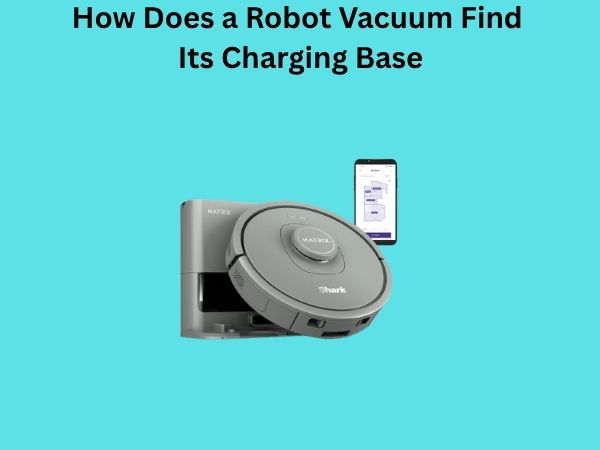
How Does a Robot Vacuum Find Its Charging Base? A Complete Guide to Navigation Technology
Have you ever watched your robot vacuum elegantly glide across your floors, only to wonder how it manages to find its way back to the charging dock when the battery runs low? It’s like watching a tiny robot dog return home without being called—almost magical, right? But there’s nothing magical about it. The technology behind this seemingly intelligent behavior is actually quite fascinating and relies on a combination of sophisticated sensors, mapping algorithms, and clever navigation strategies.
In this comprehensive guide, I’ll walk you through the inner workings of how robot vacuums locate and return to their charging bases. Whether you’re considering purchasing your first robot vacuum or you’re simply curious about the technology that powers these helpful household devices, you’ll gain valuable insights into what makes them tick.
Understanding the Basics: Why Finding the Base Matters
Think of a robot vacuum’s charging base as its home base—without knowing where it is, the vacuum would be lost in your home, unable to recharge and continue its cleaning mission. This is why the ability to find and dock with the charging base is absolutely crucial to a robot vacuum’s functionality.
When a robot vacuum’s battery drops to a certain threshold, usually around 20 percent, it needs to stop what it’s doing and navigate back to its dock. Without this capability, your vacuum would simply run out of power in the middle of your living room, leaving you with an incomplete cleaning job and a dead machine.
The Technology Behind Base Detection
Infrared Signals: The Most Common Method
The majority of modern robot vacuums use infrared signals to locate their charging bases. When you think about it, this method is remarkably elegant. The charging dock emits an infrared signal, similar to what a television remote uses, and the robot vacuum has an infrared receiver that picks up this signal.
When the vacuum needs to return home, its sensors sweep for this infrared signal. As the vacuum moves closer to the dock, the signal becomes stronger, helping the robot navigate more accurately toward its destination. It’s essentially like the dock is broadcasting a beacon that says, “I’m over here!”
How Infrared Navigation Works in Practice
The infrared system operates in a multi-stage process. First, the dock begins broadcasting when the vacuum enters docking mode. The vacuum’s sensors detect this signal and determine which direction it should travel. The robot then moves toward the signal source, constantly adjusting its direction based on signal strength variations.
Here’s what makes this system clever: the infrared signal isn’t broadcast uniformly in all directions. Instead, it creates a pattern that helps the vacuum understand its position relative to the dock. As the vacuum gets closer, it can fine-tune its approach and align itself perfectly for docking.
Advanced Mapping and Navigation Systems
SLAM Technology: Mapping Your Home
Modern high-end robot vacuums often incorporate Simultaneous Localization and Mapping, or SLAM technology. This is where things get really interesting. SLAM allows the vacuum to build a digital map of your home while simultaneously figuring out where it is within that map.
Imagine trying to navigate a new city without GPS. You’d remember landmarks, remember the turns you made, and create a mental map of where things are. That’s essentially what SLAM does for your robot vacuum. It remembers the layout of your rooms, the obstacles it encounters, and uses this information to navigate efficiently.
LiDAR Sensors: The Game Changer
Many premium robot vacuums use LiDAR sensors, which stand for Light Detection and Ranging. These sensors work by emitting laser beams and measuring how long they take to bounce back from objects. Think of it like echolocation for robots.
LiDAR allows the vacuum to create incredibly detailed, accurate maps of your home. When combined with SLAM technology, this creates a powerful navigation system. The vacuum doesn’t just wander around hoping to find the dock—it knows exactly where the dock is positioned because it remembers the map it created during its first cleaning run.
Camera-Based Vision Systems
Some robot vacuums rely on camera-based vision systems to navigate and locate their charging base. These cameras capture visual information about the environment, and the vacuum’s processor analyzes this data to identify landmarks and navigate accordingly.
Camera systems work particularly well in homes with distinctive features. For instance, if your charging dock is positioned near a window with specific lighting, the camera can identify this visual signature and navigate toward it. It’s similar to how humans recognize their home based on familiar visual cues.
The Role of Home Positioning in Base Detection
Optimal Dock Placement Strategies
Here’s something many people don’t realize: where you place your charging dock significantly impacts how easily your robot vacuum finds it. The dock should ideally be placed in an open, accessible location.
The best locations for your charging dock include:
- Against a wall in a main hallway or open room
- Away from obstacles that might block infrared signals
- In an area with consistent lighting for camera-based systems
- Away from other infrared-emitting devices that might cause interference
- On a hard, level floor for stability and docking accuracy
If you place your dock in a corner surrounded by furniture, you’re essentially making it harder for your vacuum to find it. The infrared signal might be blocked or weakened, and the vacuum’s sensors might have difficulty approaching from certain angles.
Sensor Arrays: The Vacuum’s Sensory System
Multiple Sensors Working in Harmony
Robot vacuums don’t rely on just one sensor to find their base. Instead, they employ a sophisticated array of sensors that work together like a well-coordinated team.
Besides infrared receivers and LiDAR, vacuums typically include:
- Bump sensors that detect physical contact with obstacles
- Cliff sensors that prevent falls from stairs
- Wheel odometry sensors that track movement and distance
- Gyroscopes that help determine orientation and direction
- Accelerometers that measure acceleration and movement
When the vacuum decides it’s time to return to base, all these sensors contribute to creating a complete picture of its environment and its position within it. The vacuum’s onboard computer processes this sensor data and calculates the most efficient path back to the dock.
How Wheel Odometry Contributes to Navigation
Wheel odometry might sound complicated, but it’s actually a straightforward concept. Sensors on the vacuum’s wheels track how many rotations they’ve made. By knowing the wheel size and rotation count, the vacuum can calculate how far it has traveled.
This information is combined with directional data from gyroscopes to create a dead-reckoning system. While this method alone isn’t precise enough for long-term navigation, when combined with infrared signals or visual landmarks, it becomes incredibly accurate.
The Docking Process: The Final Approach
Precision Alignment and Contact
Finding the general vicinity of the dock is one thing; actually docking successfully is another. Once the vacuum gets close to the base, precision becomes critical. The dock has metal contacts that must connect with matching contacts on the vacuum to transfer power.
To ensure proper alignment, the dock typically has guiding rails or angled surfaces. The vacuum approaches the dock and uses its sensors to make micro-adjustments to its position. Some vacuums use additional infrared sensors specifically designed for fine-tuning the docking alignment.
Docking Attempts and Retries
What happens if the vacuum doesn’t dock successfully on the first try? Most modern vacuums include retry logic. If docking fails, the vacuum backs up, repositions itself, and tries again. This process might repeat several times before the vacuum successfully connects with the dock.
The vacuum’s programming allows it to learn from these failures. If it consistently fails to dock from a certain angle, it might try different approach vectors. This adaptive behavior improves over time as the vacuum refines its docking technique.
Connectivity and Smart Home Integration
How Mobile Apps Track Your Vacuum’s Progress
Many of today’s robot vacuums connect to mobile apps via Wi-Fi, allowing you to monitor their activities in real-time. These apps display detailed maps of your home showing where the vacuum has cleaned, where it’s currently located, and where the dock is positioned.
This connectivity goes beyond just tracking. Some apps allow you to manually send the vacuum home, schedule cleaning sessions, or even set virtual no-go zones that the vacuum will avoid. The app essentially gives you a remote control over your vacuum’s docking behavior.
Cloud-Based Mapping and Machine Learning
The most advanced robot vacuums upload their mapping data to cloud servers. This data helps the manufacturers improve their navigation algorithms. Machine learning algorithms analyze thousands of homes to understand how different layouts affect navigation and docking success rates.
Your specific vacuum benefits from this collective learning. The algorithms that guide your vacuum’s docking behavior have been refined using data from countless other homes with diverse layouts and challenges.
Common Problems and Troubleshooting
When Your Vacuum Can’t Find Its Base
Despite sophisticated technology, robot vacuums sometimes struggle to locate their charging base. Understanding why this happens helps you fix the problem.
Common issues include:
- Infrared signal obstruction from furniture or obstacles
- Poor dock placement that’s hard for the vacuum to approach
- Interference from sunlight or other infrared sources
- Dirty sensors on the vacuum or dock
- Low battery that affects sensor sensitivity
- Map corruption or confusion in the vacuum’s memory
Solutions and Prevention Strategies
If your vacuum struggles to find its base, start by cleaning all sensors with a soft, dry cloth. Infrared receivers and cameras accumulate dust and grime over time, which reduces their effectiveness.
Next, evaluate your dock placement. Move it to a more open location if possible, ensuring there are at least 1.5 meters of clear space on both sides and 1.2 meters in front. This gives the vacuum multiple approach angles.
If problems persist, try resetting your vacuum’s internal map and letting it rediscover your home during a fresh cleaning cycle. This often resolves navigation issues stemming from corrupted map data.
Different Vacuums, Different Technologies
Budget Models and Basic Navigation
Not all robot vacuums use the same technology to find their bases. Budget-friendly models typically rely solely on infrared signals. While simpler, these systems are generally reliable for straightforward home layouts.
These vacuums might take a more random path when searching for the dock, consuming more battery in the process. However, they’re significantly cheaper and still effective for small to medium-sized homes.
Mid-Range Solutions with Enhanced Features
Mid-range vacuums often combine infrared navigation with basic mapping capabilities. They might use bump sensors and simple wall-following algorithms to navigate more efficiently than budget models.
These vacuums often include mobile app connectivity, giving you visibility into their operations without relying solely on the infrared system’s effectiveness.
Premium Models with Cutting-Edge Technology
High-end robot vacuums pull out all the stops. They combine LiDAR mapping, camera vision, advanced SLAM algorithms, artificial intelligence, and sometimes even multiple redundant systems. These vacuums rarely have problems finding their docks, regardless of home layout.
Premium models also tend to update their software regularly, meaning their navigation algorithms improve over time without any hardware changes.
The Future of Robot Vacuum Navigation
Emerging Technologies on the Horizon
The field of robot vacuum navigation continues to evolve rapidly. Researchers and manufacturers are experimenting with new technologies that promise even more reliable docking and navigation.
Ultra-wideband technology, similar to what’s used in advanced smartphone positioning systems, may soon allow vacuums to pinpoint their location with incredible accuracy. 5G connectivity might enable real-time cloud-assisted navigation where your home’s layout is instantly recognized by the vacuum’s algorithms.
Artificial Intelligence and Predictive Navigation
Machine learning is poised to revolutionize how vacuums navigate. Future models might predict where you’ll place your furniture and adapt their cleaning patterns accordingly. They might even recognize when you’ve returned home and adjust their docking behavior to minimize noise.
Some manufacturers are experimenting with AI systems that can learn your home’s seasonal changes—like where you place a Christmas tree or summer furniture—and adapt accordingly without requiring manual input from you.
Conclusion
The way robot vacuums find their charging bases is a beautiful example of how multiple technologies work together to create a seamless user experience. From infrared beacons to sophisticated LiDAR mapping systems, from wheel odometry to cloud-based machine learning, these devices employ an impressive arsenal of tools to accomplish what seems simple but is actually quite complex.
Whether your vacuum uses basic infrared navigation or cutting-edge SLAM technology with LiDAR sensors, the fundamental goal remains the same: getting the vacuum home safely and efficiently so it can recharge and continue serving you. As technology continues to advance, we can expect even more reliable and intelligent navigation systems that make robot vacuums increasingly indispensable household helpers.
Understanding how these systems work helps you appreciate the engineering that goes into your robot vacuum and empowers you to optimize its performance through proper dock placement and maintenance. Whether you’re already enjoying the convenience of a robot vacuum or considering taking the plunge into autonomous cleaning, knowing the “how” behind the “home” makes all the difference.
Frequently Asked Questions
Can I place my robot vacuum’s charging dock anywhere in my home?
While your robot vacuum can find its dock in many locations, optimal placement matters significantly. The dock should be positioned against a wall in an open, accessible area with at least 1.5 meters of clear space on both sides. Avoid placing it in narrow corridors, tight corners, or locations where furniture might obstruct the infrared signal. Poor placement doesn’t make docking impossible, but it can substantially increase docking failures and battery consumption.
How often does my robot vacuum need to recalibrate its map to find the dock?
Most modern robot vacuums don’t require manual recalibration under normal circumstances. They continuously update their maps during cleaning sessions. However, if you significantly rearrange your furniture or experience navigation issues, you can manually trigger a map reset through your vacuum’s app. This forces the vacuum to rediscover your home’s layout during its next cleaning session. Generally, this is only necessary if the vacuum consistently struggles with navigation or docking.
What should I do if my robot vacuum keeps missing its dock?
Start by cleaning the infrared sensors on both the vacuum and the dock with a soft, dry cloth. Dust accumulation is the most common culprit. Next, ensure your dock is properly positioned with adequate clearance around it. Check for potential infrared interference from windows receiving direct sunlight or other electronic devices. If problems persist, try resetting the vacuum’s map and running a fresh cleaning cycle. If your vacuum is quite old, the infrared receiver might be degrading and may need professional servicing.
Do more expensive robot vacuums find their docks faster than budget models?
Generally, yes. Premium robot vacuums with LiDAR and advanced SLAM technology typically navigate more efficiently and dock more reliably than budget models relying solely on infrared signals. They create comprehensive maps that allow them to take direct routes to the dock rather than searching randomly. However, budget vacu


![7 Best Robot Vacuum Eufy [2026]](https://robotvacuumfact.com/wp-content/uploads/2026/08/7-best-robot-vacuum-eufy-2026-featured-768x432.jpg)