How Does a Robot Vacuum Know Where to Clean? The Complete Guide to Smart Navigation Technology
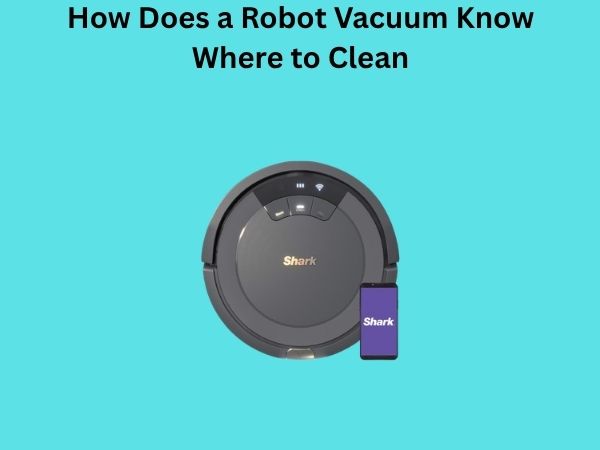
Have you ever watched your robot vacuum glide across your floor and wondered what’s actually going on inside that little disc-shaped device? I mean, it seems almost magical, right? Your vacuum moves around your home without bumping into walls, remembers where it’s been, and somehow knows exactly where the dirt is hiding. But there’s no magic here—just some seriously clever technology working behind the scenes.
If you’re thinking about buying a robot vacuum or you already own one and want to understand how it actually works, you’ve come to the right place. Today, we’re diving deep into the fascinating world of robot vacuum navigation systems. Let’s explore how these smart devices map your home, detect obstacles, and plan their cleaning routes like tiny, autonomous experts.
Understanding Robot Vacuum Navigation: The Basics
Before we get into the nitty-gritty details, let’s talk about the fundamental concept. A robot vacuum isn’t randomly wandering around your house hoping to hit some dirt. Instead, it’s using a combination of sensors, software, and mapping technology to create a strategic plan. Think of it like the difference between a drunk person stumbling around a room versus a sober person who’s studied the layout beforehand.
Modern robot vacuums use several different navigation methods, and depending on the model you own, it might use one or multiple technologies simultaneously. Some vacuums are basic and use simple bump sensors, while premium models employ advanced laser technology and artificial intelligence. Let’s break down each approach so you understand what’s happening when your vacuum is doing its thing.
Why Navigation Matters for Your Clean Home
You might be asking yourself, “Why should I care how my vacuum navigates?” Well, here’s the thing: the navigation method directly impacts how clean your floors actually get. A vacuum that knows exactly where it’s been won’t waste battery power retracing its steps. A vacuum that can map your home efficiently will cover more ground in less time. So understanding navigation isn’t just tech talk—it actually affects whether you get a truly clean home or just a partially cleaned one.
The Sensor Technology Behind Smart Vacuums
At the heart of every robot vacuum’s ability to know where to clean are sensors. Lots of them. These tiny devices are essentially the vacuum’s eyes, ears, and touch receptors all rolled into one. Let me walk you through the main types you’ll find in most modern robot vacuums.
Infrared Sensors: The Cliff Detectors
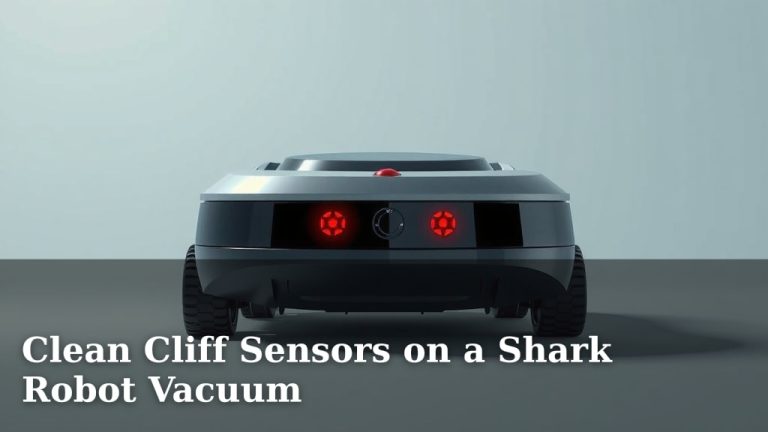
Have you ever wondered how your robot vacuum doesn’t plummet down your stairs like a tiny metal lemming? That’s thanks to infrared sensors, often called cliff detection sensors. These sensors point downward and measure the distance to the floor beneath. When your vacuum approaches a drop-off, these sensors detect the sudden absence of floor and trigger the vacuum to stop and reverse direction.
It’s like having a tiny person hanging off the front of your vacuum, constantly checking to make sure there’s solid ground ahead. Pretty clever, right? Without these sensors, you’d probably be fishing your expensive cleaning device out of the basement every other day.
Bumper Sensors: Gentle Touch Technology
If infrared sensors are the vacuum’s eyes, bumper sensors are its sense of touch. Most robot vacuums have a physical bumper that runs around the perimeter of the device. When this bumper makes contact with an object—whether it’s your couch leg, a wall, or your cat (though hopefully your cat moves away first)—it triggers the vacuum to stop, back up, and navigate around the obstacle.
These sensors work through simple mechanical switches or more sophisticated pressure sensors. Either way, they’re saying, “Hey, there’s something in the way. Time to try a different direction.” It’s not the most sophisticated technology, but it’s incredibly effective and reliable.
Wheel Odometry: Tracking Movement
Here’s something that might surprise you: your robot vacuum is keeping track of how far it has traveled. Wheel odometry sensors monitor the rotation of the vacuum’s wheels and calculate distance traveled. This helps the vacuum understand its position relative to where it started.
While this method isn’t precise enough on its own for perfect navigation, it works in combination with other sensors to help the vacuum build a mental map of your home. Think of it as the vacuum’s pedometer, counting its steps as it moves through your space.
Mapping Technology: The Game-Changer
Now we’re getting to the really impressive stuff. While basic bump sensors work well enough, they don’t create a actual map of your home. That’s where mapping technology comes in, and it’s revolutionized the world of robot vacuums.
LIDAR: Laser Mapping for Precision Cleaning
LIDAR stands for Light Detection and Ranging, and it’s basically like giving your robot vacuum a superpower. At the top of most premium robot vacuums, you’ll see a small turret-like structure. That’s the LIDAR sensor. It continuously spins and shoots out laser pulses in all directions, measuring the time it takes for those pulses to bounce back off objects and walls.
By analyzing these measurements, the vacuum creates a detailed 2D map of your home—a birds-eye view showing walls, furniture, doorways, and open spaces. It’s similar to how bats use echolocation, except with lasers instead of sound waves. The vacuum updates this map constantly as it moves, adjusting its understanding of the environment in real-time.
The beauty of LIDAR is its accuracy and speed. Within minutes, a LIDAR-equipped vacuum can create a fairly complete map of your home. It can identify different rooms, remember where it has already cleaned, and plan efficient routes that minimize overlap and missed spots.
Camera-Based Navigation Systems
Not all robot vacuums use LIDAR, and some manufacturers have opted for camera-based systems instead. These vacuums have one or more cameras mounted on them that capture images as they move through your space. Advanced computer vision algorithms analyze these images to detect walls, objects, and room layout.
Some camera systems are quite sophisticated, using visual simultaneously localization and mapping (vSLAM) technology. This is a bit of a mouthful, but essentially it means the vacuum is simultaneously creating a map while figuring out where it is within that map—using only visual information from its cameras.
Camera systems work reasonably well in well-lit environments, but they can struggle in dim lighting or very dark spaces. However, they tend to be less expensive than LIDAR systems, which is why you’ll find them on many mid-range robot vacuums.
Combination Systems: Getting the Best of Both Worlds
Some of the most advanced robot vacuums don’t rely on just one navigation system. Instead, they combine multiple technologies—LIDAR, cameras, infrared sensors, bumpers, and wheel odometry—all working together. This redundancy means the vacuum has multiple ways to understand its environment and can correct for any individual sensor errors.
It’s like having backup plans for your backup plans. If one system gives bad information, the other systems can catch it and keep the vacuum on track. This results in incredibly accurate navigation and efficient cleaning patterns.
How Robot Vacuums Build and Store Maps
Okay, so your vacuum is collecting all this sensor data. But what does it actually do with it? Let’s talk about how it creates, stores, and uses maps.
Creating the Initial Map
When you first turn on a new robot vacuum, it doesn’t know anything about your home. So it goes into exploration mode. The vacuum will systematically move through your space, collecting sensor data and building a map. Some vacuums do this during their first cleaning cycle, while others have a specific mapping mode you need to run first.
During this initial mapping phase, the vacuum is essentially taking mental notes: “Okay, there’s a wall here. There’s a doorway here. This open space is about 20 feet long.” It’s like you walking through a new house and mentally noting where everything is.
Data Storage and Cloud Considerations
Where does your vacuum actually store this map data? Most modern robot vacuums store mapping information in their onboard memory. The map is saved on the vacuum itself and persists even after the battery dies or you turn it off. This is why your vacuum “remembers” your home between cleaning sessions.
Many connected robot vacuums also send this data to cloud servers, where it’s stored and can be accessed through the manufacturer’s smartphone app. This allows you to view maps on your phone, set custom cleaning preferences, and sometimes even help the vacuum understand your home better. Of course, this does raise privacy considerations—you’re essentially giving a company a detailed map of your home’s layout.
Map Updates and Improvements
Here’s something I find really neat: your vacuum doesn’t just create a map once and stick with it forever. Every time it cleans, it refines and updates the map based on new sensor data. If you move furniture, the vacuum will eventually recognize the change and adjust its map accordingly. It’s constantly learning and improving its understanding of your space.
Route Planning: How Vacuums Decide Where to Go
So now your vacuum has a map. The next question is: how does it decide which route to take and where to focus its cleaning effort?
Systematic Cleaning Patterns
Most modern robot vacuums don’t randomly bounce around your home. Instead, they use systematic cleaning patterns. The two most common approaches are:
- Wall-following mode: The vacuum stays along the perimeter of rooms, following walls and edges. This is particularly good for picking up debris that accumulates near walls and baseboards.
- Grid-pattern mode: The vacuum divides the space into a grid and methodically cleans back and forth, covering one section at a time before moving to the next. This ensures comprehensive coverage.
Some vacuums use a combination of both patterns, or they’re smart enough to adjust their pattern based on the room layout. For example, they might follow walls in long corridors but switch to a grid pattern in large open rooms.
Room-by-Room Cleaning
Premium robot vacuums that use LIDAR are often capable of identifying separate rooms and treating them as distinct zones. This means the vacuum can clean the living room completely, then move to the kitchen, then the bedroom, rather than randomly bouncing between rooms.
This room-by-room capability is incredibly useful if you want to focus cleaning on specific areas or if you want to schedule different cleaning times for different rooms. You might want your bedroom cleaned in the afternoon but your living room cleaned in the morning when you’re out of the house.
Smart Scheduling and Zoning
Speaking of scheduling, many connected robot vacuums let you set up multiple cleaning tasks throughout the week. You can assign different time slots to different rooms and set up virtual boundaries (sometimes called no-go zones or keep-out zones) to prevent the vacuum from cleaning certain areas.
This level of control is possible because the vacuum knows exactly where it is at all times and can navigate to specific areas with precision. Without good mapping and navigation, this kind of fine-tuned control wouldn’t be possible.
Obstacle Detection and Avoidance
While mapping tells the vacuum about the general layout of your home, it still needs to handle unexpected obstacles in real-time.
Real-Time Obstacle Recognition
Imagine you’ve set your vacuum to clean while you’re away from home. Mid-clean, your kids leave toys on the floor, or you bring in a new piece of furniture that wasn’t there during the initial mapping. What does the vacuum do?
This is where real-time sensor feedback comes in. The bumper sensors, LIDAR, and cameras are constantly scanning the immediate area around the vacuum. When the vacuum detects an unexpected obstacle, it stops, backs up, and navigates around it. The vacuum learns that there’s a new obstacle in that location and adjusts its future routes accordingly.
Avoiding Tangling Hazards
Robot vacuums are notorious for getting tangled in things like cords, hair, and fringed rugs. While their navigation systems help them avoid these hazards by detecting them as obstacles, many modern vacuums have additional strategies. Some have edge sensors that help them detect and avoid cords before they get tangled. Others use AI algorithms trained on images of common tangling hazards.
It’s not a perfect system—you’ll still want to vacuum-proof your floors by removing cords and cleaning up clutter—but the technology is constantly improving.
The Role of Artificial Intelligence and Machine Learning
Here’s where things get really interesting. The latest generation of robot vacuums doesn’t just follow pre-programmed routes. They’re learning.
Predictive Cleaning Patterns
Advanced robot vacuums use machine learning to analyze your cleaning patterns and habits. Where do you spend the most time? Which rooms get dirty fastest? Where do you typically leave items on the floor? By analyzing this data, the vacuum can predict which areas need more frequent cleaning and adjust its schedule and routing accordingly.
It’s like the vacuum is getting to know you and your home. It learns that your kitchen needs daily cleaning because that’s where you cook, but your formal living room only needs weekly attention because nobody really goes in there.
Intelligent Mopping Modes
Many robot vacuums also include mopping functionality, and here’s where AI really shines. The vacuum can identify which areas are hard floors and which are carpeted. It knows to avoid mopping carpeted areas and focus on hard surface floors. Some advanced models can even recognize specific floor types and adjust water output accordingly—using more water on tile but less on delicate laminate.
This kind of intelligence would be almost impossible without sophisticated mapping and learning algorithms.
Practical Tips for Optimizing Your Robot Vacuum’s Navigation
Now that you understand how robot vacuums navigate, let me share some practical tips for getting the best performance from yours.
Preparing Your Home for Better Navigation
- Clear the floors: While robot vacuums are good at detecting obstacles, they’re better at cleaning when the floor is relatively clear. Remove cords, toys, and other potential tangling hazards before running your vacuum.
- Close doors strategically: If you want to prevent your vacuum from entering certain rooms, close the doors. This helps the vacuum focus on areas you want cleaned and prevents it from getting confused by extra spaces.
- Mark off problem areas: Use magnetic strips or physical barriers to mark areas where the vacuum struggles. Many advanced models support virtual boundaries in their apps, but physical barriers work too.
- Provide good lighting: If your vacuum uses camera-based navigation, adequate lighting helps. Make sure rooms are reasonably well-lit when the vacuum is running.
Maintaining Your Vacuum’s Navigation Systems
Just like any technology, navigation sensors need maintenance. Keep the LIDAR turret clean—dust can interfere with laser measurements. Clean the bumpers and wheels regularly. Make sure cameras are clear and unobstructed. A little maintenance goes a long way toward keeping your vacuum’s navigation running smoothly.
Comparing Navigation Technologies: What’s Best for You?
At this point, you might be wondering which navigation technology is actually the best. The honest answer is that it depends on your needs and budget.
LIDAR Vacuum Pros and Cons
LIDAR-equipped vacuums offer excellent accuracy, fast mapping, and precise navigation. They work well in any lighting condition. The main downside? They’re more expensive. You’re paying for that technology, and it shows in the price tag.
![7 Best Premium Robot Vacuum [2026]](https://robotvacuumfact.com/wp-content/uploads/2026/08/7-best-premium-robot-vacuum-2026-featured-768x432.jpg)