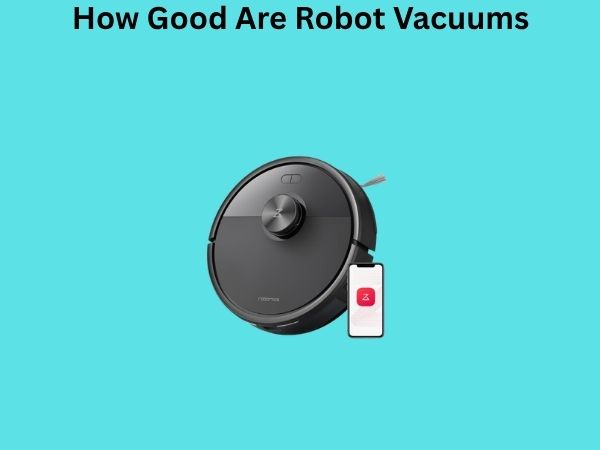
The Truth Exposed: How Good Are Robot Vacuums?
You’ve probably seen those sleek, disc-shaped devices gliding across hardwood floors in commercials, and you might be wondering if they’re worth the hype. The question “how good are robot vacuums?” has become increasingly common as more people consider automating their cleaning routines. Let me dive deep into this topic and give you the honest answer you’re looking for.
Understanding What Robot Vacuums Actually Do
Before we judge whether robot vacuums are any good, we need to understand what they’re actually designed to accomplish. These aren’t magical cleaning machines that will eliminate your need for a traditional vacuum forever. Instead, think of them as maintenance cleaners—devices that keep your floors tidier between deeper cleaning sessions.
Robot vacuums work by using sensors to navigate your home, sucking up dust and debris as they move across surfaces. They’re meant to handle the everyday mess: pet hair, dust particles, crumbs, and light dirt accumulation. They’re not built to deep-clean carpets or handle major messes like you’d tackle with a full-sized vacuum.
The Cleaning Performance Reality Check
Let’s be honest here—this is where the real conversation needs to happen. When manufacturers claim their robot vacuums can achieve 95% cleaning efficiency, what does that actually mean in your living room?
Suction Power Limitations
Robot vacuums have inherent size constraints. Because they need to be compact enough to fit under furniture and light enough to operate independently, their suction power simply cannot match that of traditional upright or canister vacuums. A typical robot vacuum produces between 1000 to 2000 pascals of suction, while standard vacuums generate 200 to 240 air watts of power—vastly different in real-world terms.
This limitation means they excel at picking up lightweight debris but struggle with heavier particles or deeply embedded dirt in carpet fibers. If you have thick shag carpeting, you might find that robot vacuums aren’t your best solution.
Edge and Corner Cleaning Challenges
Here’s something manufacturers often gloss over: robot vacuums cannot clean tight corners and edges effectively. Their circular design prevents them from reaching into 90-degree angles where dust loves to accumulate. You’ll still need to manually clean baseboards and corners with a traditional vacuum or broom periodically.
Some newer models feature side brushes that extend slightly, but even these don’t achieve the thorough edge cleaning you’d get with a conventional vacuum’s edge attachments.
Navigation and Smart Features
One area where robot vacuums genuinely shine is their intelligent navigation technology. Modern models use a combination of sensors, cameras, and mapping algorithms to understand your home’s layout.
Mapping Technology Advancements
Premium robot vacuums now include LIDAR (Light Detection and Ranging) technology, which creates detailed maps of your home. This allows them to navigate more efficiently and even create custom cleaning zones. You can tell your vacuum to focus on high-traffic areas or avoid specific rooms—a feature that genuinely improves their practical utility.
Less expensive models rely on bump sensors and random path algorithms, meaning they clean less efficiently and take much longer to cover the same area.
App Control and Scheduling
The ability to schedule cleaning sessions from your phone is genuinely convenient. Imagine coming home to already-cleaned floors without lifting a finger. You can set your vacuum to run while you’re at work, and return to a tidier home. This convenience factor is where many people find real value.
Battery Life and Runtime Limitations
Here’s a practical concern that often catches people off guard. Most robot vacuums run for 60 to 120 minutes per charge. For a small to medium apartment, this might be sufficient. For a larger home, you’re looking at incomplete coverage or waiting for the battery to recharge mid-session.
The vacuum’s battery life also degrades over time. After a couple of years, you might notice your robot takes slightly longer to clean the same space, or doesn’t quite reach edges it used to cover. This is normal wear and tear, but it’s worth factoring into your long-term cost calculation.
Maintenance and Long-Term Costs
Owning a robot vacuum isn’t a set-it-and-forget-it proposition. These devices require regular maintenance, and that maintenance has ongoing costs.
Regular Maintenance Tasks
- Emptying the dustbin after each cleaning cycle
- Cleaning the brush rollers weekly to prevent hair tangles
- Wiping sensors to maintain navigation accuracy
- Replacing filter cartridges every few months
- Clearing debris from side brushes
- Occasional wheel cleaning for optimal movement
If you have pets or a shedding household, you might need to perform these maintenance tasks even more frequently. This isn’t burdensome, but it does require commitment and slightly undercuts the “automation” appeal.
Replacement Parts and Costs
Brushes, filters, and batteries eventually wear out and need replacement. A replacement battery can cost between $100 to $300. Brush kits range from $30 to $100. Filter replacements typically run $15 to $50. Over five years, these replacement costs can add up significantly.
Comparing Different Floor Types
The quality of a robot vacuum’s performance varies dramatically depending on your flooring situation.
Performance on Hard Floors
Robot vacuums perform their best on hard floors like tile, laminate, and vinyl. The hard surface allows for easy debris pickup, and the vacuum can move quickly and efficiently. If your home is primarily hard-floored, a robot vacuum is genuinely a solid choice.
Carpet Cleaning Capability
This is where things get murkier. Robot vacuums can handle thin, low-pile carpets reasonably well. They’ll pick up surface debris and some dust. However, they struggle with medium to thick carpeting. They won’t deep-clean carpet fibers the way a traditional vacuum with carpet-cleaning brushes can.
If you have mix of carpeted and hard floors, a robot vacuum provides maintenance cleaning on both, but neither reaches optimal performance levels compared to specialized cleaning methods.
Multilevel Homes
Robot vacuums cannot navigate stairs. If you have a two-story home, you’ll need separate cleaning systems for each level, or you’ll accept that only one floor gets automated cleaning. This is a significant limitation many people overlook when considering these devices.
Pet Hair and Allergen Control
For pet owners, robot vacuums present both advantages and challenges worth exploring.
Hair Pickup Effectiveness
Robot vacuums can handle light to moderate pet hair shedding well. They’re excellent at picking up daily hair accumulation. However, during heavy shedding seasons, they might become overwhelmed and require more frequent bin emptying and brush cleaning.
The tangling problem is real. Pet hair wraps around brush rollers, reducing efficiency and requiring manual cleaning. If you have long-haired pets, expect to clean the brush rollers at least twice weekly.
Allergen Filtration
If you’re concerned about allergens, robot vacuums offer mixed benefits. Their HEPA filters can capture fine particles, but they also recirculate some air directly back into your home as they clean. The benefit is modest compared to robust air purification systems.
Smart Home Integration Benefits
Robot vacuums that integrate with smart home systems offer genuine convenience that shouldn’t be underestimated.
Voice Assistant Compatibility
You can control compatible robot vacuums using voice commands through Alexa, Google Assistant, or Siri. Simply saying “Alexa, start the vacuum” is genuinely convenient, particularly if you’re busy or have mobility limitations.
Automated Routine Integration
Setting your robot vacuum to run automatically when you leave for work creates a seamless cleaning routine. Combined with smart home scheduling, this creates a hands-off cleaning system that genuinely works.
Common Misconceptions About Robot Vacuums
Several myths persist about robot vacuum capabilities, and I want to address them directly.
Myth: They Replace Traditional Vacuums Entirely
This is false. Robot vacuums supplement traditional cleaning methods; they don’t eliminate the need for them. You’ll still need a traditional vacuum for deep cleaning, stairs, and detailed work.
Myth: They Work on All Floor Types Equally
As discussed, performance varies significantly based on flooring. Marketing materials often show them working wonderfully on polished hardwood—the worst-case scenario where they’re most likely to succeed.
Myth: Set It and Forget It
These devices require regular maintenance, occasional intervention, and aren’t truly autonomous. You can’t just set them running and ignore them completely, particularly with pets or heavy traffic areas.
Who Should Actually Buy One?
Rather than claiming robot vacuums are universally good or bad, let me describe who genuinely benefits from owning one.
Ideal Candidates
- People with primarily hard-floored homes
- Individuals with limited mobility who struggle with traditional vacuuming
- Those who value convenience and don’t mind supplementing with traditional cleaning
- People with moderate, consistent household traffic
- Busy professionals who want to maintain cleanliness without effort
- Pet owners with light to moderate shedding situations
Poor Fit Scenarios
- Homes with thick, high-pile carpeting as primary flooring
- Multilevel homes without significant hallway space to place additional units
- Extremely cluttered homes with many obstacles on floors
- People with severe pet shedding issues
- Those with serious allergen sensitivities requiring deep filtration
- Budget-conscious buyers who cannot afford ongoing maintenance costs
Real-World Expectations vs. Marketing Claims
Marketing materials show robot vacuums gliding gracefully across pristine floors, but reality tells a different story.
What Works Well in Real Homes
Robot vacuums genuinely excel at maintaining cleanliness in relatively open floor plans with minimal obstacles. They’re fantastic at preventing daily dust and debris accumulation when your home allows them free movement.
Where Reality Disappoints
Robot vacuums often struggle with small obstacles, cluttered homes, and complex layouts. They might get stuck under furniture, miss entire rooms, or require manual repositioning. They don’t navigate cords, books, or toys particularly well.
The cleaning performance, while adequate for maintenance, won’t impress anyone comparing it to a quality traditional vacuum’s results.
Cost-Benefit Analysis
Robot vacuums range from $200 budget models to $1000+ premium devices. Is the investment worthwhile?
Initial Investment
Budget models start around $200-400, mid-range options cost $400-700, and premium models exceed $800. Your initial investment depends on desired features like mapping technology and smart home integration.
Five-Year Total Cost Calculation
Beyond the initial purchase, factor in replacement parts ($200-500), occasional repairs ($50-300), and electricity costs ($30-50 annually). Over five years, a $500 robot vacuum costs approximately $750-1300 total, depending on maintenance and repairs needed.
Compare this to purchasing traditional vacuums over the same period, plus your time value for manual vacuuming, and robot vacuums start looking more economical for certain lifestyles.
Future of Robot Vacuum Technology
Robot vacuum technology continues evolving rapidly, and emerging developments are worth discussing.
Advancements on the Horizon
Artificial intelligence is becoming increasingly sophisticated, allowing robots to learn home layouts and cleaning patterns more effectively. Some manufacturers are developing mopping capabilities, combining vacuuming and wet cleaning into single devices.
Battery technology improvements promise longer runtimes and faster charging. Multi-robot systems that work in coordination are emerging, potentially solving the coverage problem for larger homes.
Making Your Final Decision
After considering all factors, here’s how to decide if a robot vacuum suits your situation.
Assessment Questions
- Is your home primarily hard-floored with minimal carpeting?
- Do you have a relatively uncluttered floor space?
- Would daily vacuuming be genuinely inconvenient for you?
- Can you afford the initial investment plus maintenance costs?
- Are you comfortable with ongoing maintenance responsibilities?
- Do you expect occasional manual intervention and repositioning?
If you answered yes to most of these questions, a robot vacuum might be a worthwhile investment. If you answered no to several, you’d likely be disappointed.
Conclusion
So, how good are robot vacuums? The honest answer is: they’re good at what they’re designed to do, which is maintenance cleaning and dust prevention. They’re not miracle devices that eliminate vacuuming entirely, nor are they revolutionary cleaning tools that surpass traditional methods.
For the right person in the right situation, robot vacuums provide genuine convenience and value. They excel at maintaining cleanliness in open, hard-floored spaces and integrate well with modern smart home systems. However, they have clear limitations regarding suction power, edge cleaning, stair navigation, and deep carpet cleaning.
The key to satisfaction is understanding these limitations upfront and setting realistic expectations. Don’t buy a robot vacuum expecting it to replace your traditional vacuum completely. Instead, view it as a supplementary cleaning tool that handles daily maintenance while you retain a traditional vacuum for deeper cleaning needs.
If you have a suitable home layout, can maintain the device properly, and appreciate the convenience factor, a robot vacuum is a worthwhile investment. If your situation doesn’t match these criteria, you’ll likely find the purchase disappointing regardless of the price point.
Frequently Asked Questions
Can robot vacuums handle pet hair effectively?
Robot vacuums handle light
![7 Best Robot Vacuum And Mop Consumer Reports [2026]](https://robotvacuumfact.com/wp-content/uploads/2026/08/7-best-robot-vacuum-and-mop-consumer-reports-2026-featured-768x432.jpg)