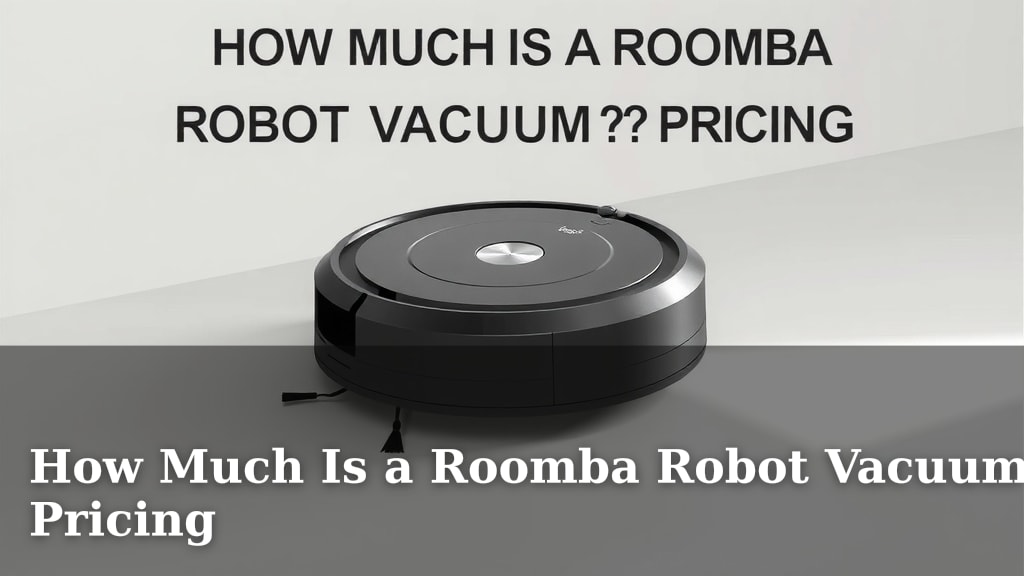
How Much Is a Roomba Robot Vacuum? Pricing
Wondering how much a Roomba robot vacuum costs? You can expect to pay anywhere from $200 to over $1,000 for a Roomba, depending on the model and its features. The price really depends on what kind of cleaning power and smart capabilities you’re looking for. We found that simpler models handle basic cleanups well, while advanced ones offer smarter navigation and self-emptying bins.
Roomba vacuums come in many different price ranges. A basic Roomba is a great starting point for many homes. Higher-end models often include advanced mapping technology and can even learn your home’s layout. Some even come with self-emptying bases, which is a real game-changer for busy households. We’ve seen prices vary quite a bit, so knowing what you need helps a lot.
- Roomba prices range from $200 to over $1,000.
- Basic models are budget-friendly for simple cleaning.
- Advanced models offer smart mapping and self-emptying.
- Features like Wi-Fi connectivity and app control add to the cost.
- Consider your home size and cleaning needs to pick the right price point.
Let’s dive into the specifics of Roomba pricing and what you can get at each level.
Understanding Roomba Vacuum Pricing Tiers
So, you’re curious about the cost of bringing a Roomba home? We’ve researched the pricing, and it’s quite a range. You’re likely looking at spending anywhere from $200 to well over $1,000. The exact price tag really hangs on the features and how much cleaning power you need. Think of it like buying a car; there are basic models and then there are the fully loaded ones.
Entry-Level Roombas: The $200-$400 Range
If you’re just dipping your toes into the world of robot vacuums, the entry-level Roombas are a fantastic starting point. These models typically cost between $200 and $400. They’re designed to handle the everyday dust bunnies and light debris on your floors. You’ll get a robot that can autonomously clean your main living areas. Many of these still connect to your Wi-Fi. This allows for basic app control and scheduling. It’s like having a little cleaning assistant that works while you’re busy.
What to Expect in This Price Bracket
At this price, you’ll find Roombas that use a systematic cleaning pattern. They might not have the most advanced navigation, but they do a solid job on hardwood and low-pile carpets. You can expect features like automatic return-to-base charging. They also usually have basic dirt detection. This means the robot will spend more time on dirtier spots. It’s a simple, effective way to keep your floors consistently cleaner without much effort.
Mid-Range Roombas: The $400-$700 Range
Step up a bit, and you enter the mid-range segment, typically costing between $400 and $700. These models offer a noticeable upgrade in cleaning performance and smart technology. You’ll often find improved suction power. This is great for homes with pets or slightly thicker carpets. Many of these Roombas also boast better navigation systems. They use sensors to map your home more intelligently.
Smart Navigation and Enhanced Cleaning
In this tier, Roombas often feature vSLAM (Visual Simultaneous Localization and Mapping) technology. This allows them to learn and remember your home’s layout. You can then direct them to clean specific rooms via the app. We found this feature to be a real convenience. It means you can send the robot to clean just the kitchen after dinner, for example. These models also usually have more robust edge-cleaning capabilities.
Improved Filtration and Debris Handling
Another common upgrade in the mid-range is better filtration. Many of these models are equipped with high-efficiency filters. These can capture fine dust and allergens. It’s a nice bonus if you or someone in your home deals with allergies. The brush systems are often enhanced too. They are designed to tangle less with pet hair. This means less manual intervention for you. It’s a good balance of smarts and cleaning power.
High-End Roombas: The $700+ Range
Now, let’s talk about the premium end, where prices can climb to $700 and even exceed $1,000. These are the top-of-the-line models. They come packed with the latest technology iRobot has to offer. Think of them as the luxury sedans of robot vacuums. They offer the most advanced cleaning, smartest navigation, and convenient features.
Self-Emptying Bases: The Ultimate Convenience
The biggest feature you’ll find in this top tier is the self-emptying base. This is a game-changer for many users. The Roomba docks itself, and its dustbin automatically empties into a larger disposable bag in the base. This means you can go weeks without needing to touch the robot’s dustbin. We found this incredibly convenient, especially for busy households or those with larger homes. It significantly reduces the frequency of maintenance.
Advanced Intelligence and Customization
Beyond self-emptying, these Roombas boast the most sophisticated navigation. They create detailed maps of your home and can even recognize specific objects. Some can avoid cords or pet waste. You get a high degree of customization through the app. You can set cleaning schedules for specific rooms or even specific times of day. They also often have the most powerful suction and premium brush systems. These are built for maximum dirt and debris pickup.
Comparing Features Across Price Points
To help you visualize the differences, here’s a quick look at how features stack up:
| Feature | Entry-Level ($200-$400) | Mid-Range ($400-$700) | High-End ($700+) |
|---|---|---|---|
| Navigation | Basic pattern, bump sensors | Smart mapping, room selection | Advanced object recognition, precise mapping |
| Suction Power | Standard | Enhanced, good for pet hair | Maximum, best for all floor types |
| Self-Emptying Base | No | Usually no | Yes, common |
| App Control | Basic scheduling, start/stop | Room-specific cleaning, scheduling | Full customization, object avoidance |
| Filtration | Standard | High-efficiency filter | Premium high-efficiency filter |
When deciding, consider your home size. A larger home might benefit more from advanced mapping. If you have pets, stronger suction and tangle-resistant brushes are key. Think about your tolerance for maintenance. Are you okay emptying the bin daily, or do you want weeks of autonomy? Your answers will guide you to the right price point.
Factors Influencing Roomba Prices
Several factors play a role in where a specific Roomba model lands on the price spectrum. It’s not just about the cleaning power. Let’s break them down:
The Power of the Motor
A more powerful motor means stronger suction. This is essential for pulling dirt out of carpets and crevices. Higher-end models often feature stronger motors. We found that models with higher Air Watts (AW) ratings generally perform better on tougher messes. This is a key differentiator. It directly impacts how effectively it cleans your floors.
Navigation Technology Matters
Basic Roombas use simple bump-and-go navigation. They wander until they hit something. More advanced models use cameras and sensors for smarter mapping. They create a floor plan of your home. This allows for more efficient cleaning paths. It also enables features like room selection and keep-out zones. The more intelligent the navigation, the higher the cost. Many experts suggest this smarter navigation saves cleaning time (iRobot).
Smart Home Connectivity and Apps
Wi-Fi connectivity is pretty standard now. But the level of app control varies. Basic apps let you start, stop, and schedule. Advanced apps allow for customized cleaning plans. You can designate specific rooms for cleaning. You can even set cleaning frequency based on the room. This smart home integration adds to the overall price. It offers a more connected and automated experience.
Self-Emptying Capabilities
As we touched on, the self-emptying base is a premium feature. It adds significant cost to the unit. However, for many, the convenience is well worth the investment. It dramatically reduces the need for daily interaction with the vacuum. Think of it as outsourcing the dustbin emptying to your robot. This convenience comes at a higher price.
Considering these elements will help you understand why one Roomba might cost twice as much as another. It’s all about the technology and convenience packed inside.
Making the Smart Choice for Your Budget
Choosing the right Roomba isn’t just about finding the cheapest option. It’s about finding the best fit for your home and your cleaning needs. Think about your priorities:
- What is your budget range?
- Do you have pets or allergy sufferers?
- How large is the area you need cleaned?
- How important is smart mapping and app control?
- Are you willing to empty the bin regularly, or is self-emptying a must-have?
By answering these questions, you can narrow down your choices. You’ll find a Roomba that offers the best value for your specific situation. You don’t always need the most expensive model to get great results.
Conclusion
You’ve seen that Roomba robot vacuums offer a range of options to fit different budgets and needs. Prices can span from around $200 for basic models to over $1,000 for premium features. Entry-level Roombas are great for simple upkeep. Mid-range models bring smarter navigation and better cleaning for pets. Top-tier Roombas offer the ultimate convenience with self-emptying bases and advanced intelligence. When you’re ready to buy, consider your home’s size, your cleaning priorities, and how much automation you desire. Your best next step is to visit a retailer’s website or a product page and compare the specific models that match your identified needs and budget.
Frequently Asked Questions
Can I get a decent Roomba for under $300?
Yes, you absolutely can! We found that Roombas in the $200 to $300 range are excellent for basic floor cleaning. These entry-level models are perfect for keeping everyday dust and light debris under control. They typically offer essential features like automatic charging and simple scheduling via an app.
Are Roombas that cost over $700 worth the extra money?
For many people, yes. Roombas priced above $700 often include self-emptying bases, which can go weeks without you needing to empty the bin. They also usually have the most advanced navigation for efficient cleaning and object avoidance, making them a worthwhile investment if you value convenience and top-tier performance.
How does pet hair affect Roomba pricing?
Homes with pets often benefit from Roombas with enhanced suction power and tangle-resistant brush systems. These features are more commonly found in the mid-range ($400-$700) and high-end ($700+) models. While you might find some basic models can handle light pet hair, dedicated pet-friendly Roombas typically come at a higher price point due to their specialized design.
What’s the main difference between a $300 Roomba and a $500 Roomba?
The primary difference often lies in the navigation technology and cleaning intelligence. A $500 Roomba usually offers smarter mapping capabilities, allowing it to learn your home’s layout and clean more efficiently, perhaps even letting you select specific rooms. A $300 model typically uses simpler navigation patterns. You might also see improved suction power and better filtration in the $500 model.
Will a more expensive Roomba save me time in the long run?
Generally, yes. Roombas with advanced mapping and self-emptying features can save you considerable time. Smart mapping allows for quicker, more efficient cleaning paths. The self-emptying base drastically reduces the frequency of maintenance tasks. If you value your time and want a more automated cleaning experience, a higher-priced, more advanced Roomba can be a smart investment.