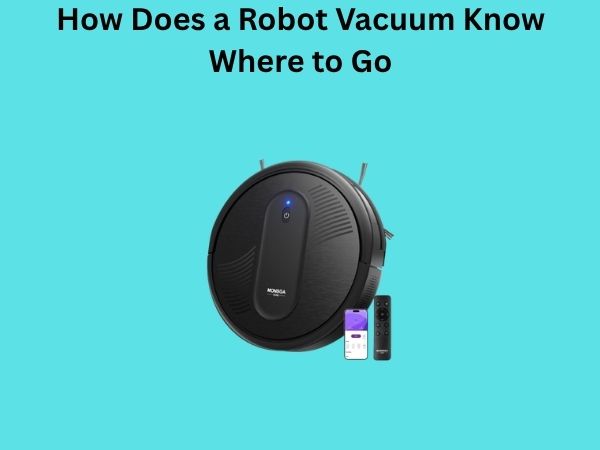
Navigation Secrets: How Does a Robot Vacuum Know Where to Go?
Have you ever wondered how your robot vacuum mysteriously glides across your living room floor without bumping into furniture or getting stuck in corners? It’s like watching a tiny robot dancer perform an intricate choreography on your hardwood floors. The truth is, these clever devices are equipped with some seriously impressive technology that would make science fiction writers jealous. Let me walk you through the fascinating world of robot vacuum navigation.
Understanding the Basics of Robot Vacuum Navigation
When you think about navigation, you probably imagine someone reading a map or following GPS directions. But robot vacuums operate in a completely different way. They don’t have access to satellite signals like your smartphone does. Instead, they rely on an intricate combination of sensors, algorithms, and mapping technology that works almost like having a tiny brain inside your cleaning device.
Think of it this way: if your home were a complex maze, the robot vacuum would be the clever mouse that not only finds its way through but also remembers every turn it takes. This memory is crucial because it allows the device to become more efficient with each cleaning cycle.
The Role of Sensors in Navigation
Every robot vacuum worth its salt is packed with various sensors. These aren’t just random additions—they’re carefully chosen tools that work together to create a comprehensive picture of your home’s layout. Let’s break down the main types of sensors you’ll find in modern robot vacuums.
Infrared Sensors and Their Purpose
Infrared sensors act like the vacuum’s eyes, constantly scanning the environment for obstacles. When your robot vacuum approaches a chair leg or the edge of a staircase, these sensors detect the object and signal the device to change direction. It’s similar to how a bat uses echolocation, except with light instead of sound.
Wheel Encoders: Counting Every Rotation
Imagine trying to walk across a room while blindfolded—you’d probably count your steps to estimate how far you’ve traveled. Robot vacuums do something similar with wheel encoders. These sensors track how many times each wheel rotates, allowing the vacuum to calculate how far it has moved. This information is essential for the device to build an accurate map of your home.
The Technology Behind Robot Vacuum Mapping
Modern robot vacuums use several sophisticated mapping technologies. The most common ones include LIDAR, camera-based mapping, and gyroscope systems. Each of these approaches has its own advantages and limitations.
LIDAR Technology: The Gold Standard
LIDAR stands for Light Detection and Ranging, and it’s genuinely fascinating technology. Picture a lighthouse spinning around, sending out beams of light in all directions. Robot vacuums with LIDAR have a rotating laser on top that does exactly this, but at a much smaller scale. The laser shoots out pulses of light, and when these pulses bounce off walls, furniture, and other objects, the sensors measure the time it takes for the light to return.
By calculating these return times, the vacuum creates a detailed 3D map of your home in real time. This is incredibly accurate—much more precise than relying solely on bumping into things or using basic infrared sensors. Premium robot vacuums often use LIDAR because it allows them to navigate efficiently and avoid obstacles they’ve never encountered before.
Camera-Based Mapping Systems
Some robot vacuums use cameras instead of or in addition to LIDAR. These cameras capture images of your home as the vacuum moves around. The device’s onboard computer analyzes these images to identify rooms, furniture, and other distinctive features. It’s like the vacuum is taking mental snapshots as it cleans.
Camera-based systems work well in well-lit environments, but they can struggle in dim lighting or during nighttime cleaning sessions. However, they’re usually more affordable than LIDAR-equipped models, which makes them attractive to budget-conscious consumers.
Gyroscopes and Accelerometers
These sensors help the robot vacuum understand its orientation and movement. Think of them as the device’s inner ear, the same system that helps you maintain balance. Gyroscopes measure rotation, while accelerometers detect changes in motion. Together, they help the vacuum understand whether it’s moving forward, turning left, or navigating around an obstacle.
How Robot Vacuums Create and Store Maps
Here’s where things get really interesting. Modern robot vacuums don’t just navigate randomly—they build actual maps of your home. On their first run, many robot vacuums operate in an exploratory mode, moving around your space and gathering data about its layout.
The Initial Mapping Process
When you first turn on a robot vacuum, it often takes a different path than it will on subsequent cleaning cycles. During this initial exploration, the device is essentially drawing a map of your home. The sensors feed information to the onboard computer, which uses sophisticated algorithms to process this data and create a spatial representation of your rooms.
Some vacuums display this map in their associated mobile app, which is pretty cool when you think about it. You can actually see how your vacuum “sees” your home. If you look at these maps, you’ll notice they’re remarkably accurate—walls are straight, corners are properly represented, and furniture is positioned correctly.
Storage and Memory Systems
Your robot vacuum stores its map in internal memory. Some models save multiple maps, which is particularly useful if your vacuum operates in different spaces or if you rearrange your furniture. Advanced models can even learn the difference between morning and evening lighting conditions or recognize seasonal changes in your home’s appearance.
Path Planning Algorithms: The Brain Behind the Movement
Once a robot vacuum has mapped your home, it needs to decide where to go next. This is where path planning algorithms come into play. These are mathematical formulas that determine the most efficient route for the vacuum to take while cleaning your entire floor.
Systematic Cleaning Patterns
Premium robot vacuums don’t clean in random zigzag patterns like older models did. Instead, they use systematic approaches:
- Grid patterns that ensure complete coverage of an area
- Wall-following techniques that hug edges and perimeters
- Zone-based cleaning where the vacuum focuses on high-traffic areas
- Room-by-room navigation for systematic coverage
Imagine if you were cleaning your house with a broom. You’d probably start at one corner and work your way across the room in a systematic pattern, right? That’s exactly what these algorithms aim to replicate. The result is more thorough cleaning and less wasted time going over the same spots repeatedly.
Efficient Route Optimization
Robot vacuums use algorithms similar to what delivery companies use to optimize their routes. The vacuum calculates the most efficient path to cover your entire floor while minimizing backtracking and wasted movement. Some high-end models even learn your home’s traffic patterns and prioritize frequently used areas.
Real-Time Obstacle Detection and Avoidance
Even with a perfect map, your home is dynamic. You might place a toy on the floor, move a chair, or leave a sock in the middle of the room. Robot vacuums need to detect these unexpected obstacles in real time and adjust their route accordingly.
How Sensors Work Together for Obstacle Detection
When a robot vacuum encounters an unexpected object, multiple sensors spring into action simultaneously. The infrared sensors detect the obstacle’s presence, wheel encoders note any sudden changes in movement, and bump sensors provide physical feedback. The vacuum’s onboard computer processes all this information in milliseconds and decides whether to go around the obstacle or reverse and take a different route.
Cliff Detection: Staying Safe on Multi-Level Homes
One of the most critical safety features in robot vacuums is cliff detection. These sensors prevent your vacuum from tumbling down stairs. Using infrared light that bounces off the floor below, cliff sensors detect when the floor suddenly drops away and signal the vacuum to reverse direction immediately. This is why robot vacuums sometimes seem to stop mysteriously near staircase edges—they’re actually protecting themselves from disaster.
Communication Technology and Smart Home Integration
Many modern robot vacuums don’t work in isolation. They connect to your home’s Wi-Fi network and communicate with smartphone apps, voice assistants, and smart home systems. This connectivity adds another dimension to their navigation capabilities.
Cloud-Based Mapping and Updates
Some premium robot vacuums send mapping data to cloud servers. This allows manufacturers to improve algorithms over time and send software updates that enhance navigation performance. It’s like your vacuum attending “night school” to become better at its job.
Multi-Floor Mapping Capabilities
If your home has multiple levels, advanced robot vacuums can create separate maps for each floor. When you carry your vacuum upstairs, it recognizes the new environment and switches to the appropriate map. This is particularly impressive technology that combines environmental recognition with stored memory.
Common Navigation Challenges and How Vacuums Overcome Them
Robot vacuums aren’t perfect, and they do face genuine challenges. Understanding these challenges helps explain why navigation sometimes fails and what manufacturers are doing to improve their devices.
Dealing with Dark and Low-Light Environments
Camera-based navigation struggles in darkness, while LIDAR performs consistently regardless of lighting. This is why LIDAR-equipped vacuums are better for homes with limited windows or for nighttime cleaning. Some manufacturers are now combining multiple technologies to overcome this limitation—using LIDAR as the primary navigation system while cameras serve as secondary helpers.
Handling Reflective and Transparent Surfaces
Mirrors, glass tables, and shiny floors can confuse robot vacuum sensors. Reflective surfaces might trick LIDAR into thinking there’s more space than actually exists, while transparent glass might not be detected at all. Smart vacuums are learning to identify these problematic surfaces and account for them in their navigation algorithms.
Navigating Cluttered Environments
While robot vacuums excel at avoiding large obstacles, small objects like cords, hair ties, or small toys can pose problems. Some devices have learned to recognize these hazards and avoid them, while others might get tangled. This is an ongoing area of improvement for manufacturers.
Comparing Different Navigation Technologies
Not all robot vacuums navigate the same way. Let’s compare the main approaches so you understand the differences:
Random Navigation vs. Systematic Navigation
Older robot vacuums used random navigation, essentially moving around your home like a pinball bouncing off obstacles. While these vacuums eventually covered your entire floor, they were inefficient and unpredictable. Modern systematic navigation is far superior—it covers your home more completely in less time and follows predictable patterns you can understand and anticipate.
Budget Models vs. Premium Mapping Solutions
Budget robot vacuums often rely solely on bump sensors and basic infrared detection. They work, but inefficiently. Premium models with LIDAR or advanced camera systems navigate with precision and efficiency that makes a noticeable difference in cleaning performance. If you have a large home or complex layout, the investment in better navigation technology pays dividends.
The Future of Robot Vacuum Navigation
Navigation technology continues to evolve rapidly. Manufacturers are exploring artificial intelligence, machine learning, and even more advanced sensor combinations to create vacuums that navigate like they have minds of their own.
Artificial Intelligence and Learning Algorithms
Future robot vacuums will likely use AI to learn your home’s patterns even more deeply. Imagine a vacuum that knows to clean the kitchen more frequently because that’s where you eat, or that recognizes when you have guests over and focuses on visible areas. These capabilities are already appearing in the most advanced models.
Enhanced Environmental Recognition
Soon, robot vacuums may be able to identify different floor types and adjust their cleaning intensity accordingly. They might recognize carpet versus hardwood and optimize their approach for each surface. Some models already do this to a limited degree, but future iterations will be even more sophisticated.
Practical Tips for Optimizing Your Robot Vacuum’s Navigation
Understanding how your robot vacuum navigates can help you get better performance from your device. Here are practical steps you can take:
- Keep floors clear of small objects and cords that can interfere with navigation
- Allow your vacuum to complete its initial mapping phase without interruption
- Position your robot vacuum’s dock in a central, easily accessible location
- Maintain clean sensors by wiping them regularly with a soft cloth
- Update your vacuum’s software regularly to benefit from navigation improvements
- Set up virtual boundaries or no-go zones if your vacuum supports them
- Avoid rearranging furniture too frequently during the initial learning period
Conclusion
Robot vacuums know where to go through an impressive combination of sensors, mapping technologies, and intelligent algorithms. From LIDAR scanning the environment with laser precision to cameras capturing detailed images, these devices have evolved far beyond simple bump-and-move robots. They create detailed maps of your home, use sophisticated path planning algorithms to clean systematically, and detect obstacles in real time to avoid getting stuck.
The navigation technology in modern robot vacuums represents genuine innovation. What seems like magic—a small device autonomously cleaning your home without human direction—is actually the result of years of engineering and technological advancement. As these devices continue to evolve, their navigation capabilities will only become more impressive, making them increasingly valuable additions to any home.
Whether you own a basic model or a premium LIDAR-equipped vacuum, understanding these navigation principles can help you appreciate the technology and get the most out of your cleaning companion. The next time you watch your robot vacuum glide smoothly across your floors, you’ll know exactly what’s happening beneath that innocent-looking exterior.
Frequently Asked Questions
Can robot vacuums navigate in complete darkness?
Robot vacuums with LIDAR can navigate effectively in complete darkness since LIDAR uses laser light to create maps independent of ambient lighting conditions. However, camera-based navigation systems struggle significantly in low-light environments. If you plan to run your vacuum at night, a LIDAR-equipped model is your best choice for reliable navigation.
How long does it take a robot vacuum to map my home?
The initial mapping process typically takes one to three cleaning cycles, depending on your home’s size and complexity. During this time, the vacuum explores your space and builds its internal map. Once mapping is complete, the vacuum usually becomes noticeably more efficient with its cleaning pattern. Larger homes or homes with many rooms may require additional exploration time.
Do robot vacuums lose their maps if the power goes out?
Most modern robot vacuums store their maps in persistent memory that survives power outages. However, if your vacuum completely drains its battery for an extended period, or if there’s a hardware failure, the map might be lost. Premium models often back up maps to cloud storage, providing an extra layer of protection against data loss.
Can you see the map my robot vacuum creates in the app?
Yes, many robot vacuums allow you to view the map they’ve created through their companion smartphone app. This visual representation shows your home’s layout as the vacuum perceives it, complete with walls, furniture positions, and any no-go zones you’ve set. Some apps even let you manually create or edit these maps if the automatic mapping isn’t perfect.
What happens if my robot vacuum encounters an area it hasn’t mapped before?
When a robot vacuum encounters an unmapped area, its sensors immediately spring into action. Infrared and bump sensors detect obstacles, while the device uses real-time processing to navigate safely through the unknown space. The vacuum typically adds this new area to its existing map, so the next cleaning cycle will be more efficient.
![7 Best Robot Vacuum Under $50 [2026]](https://robotvacuumfact.com/wp-content/uploads/2026/09/7-best-robot-vacuum-under-50-2026-featured-768x432.jpg)